
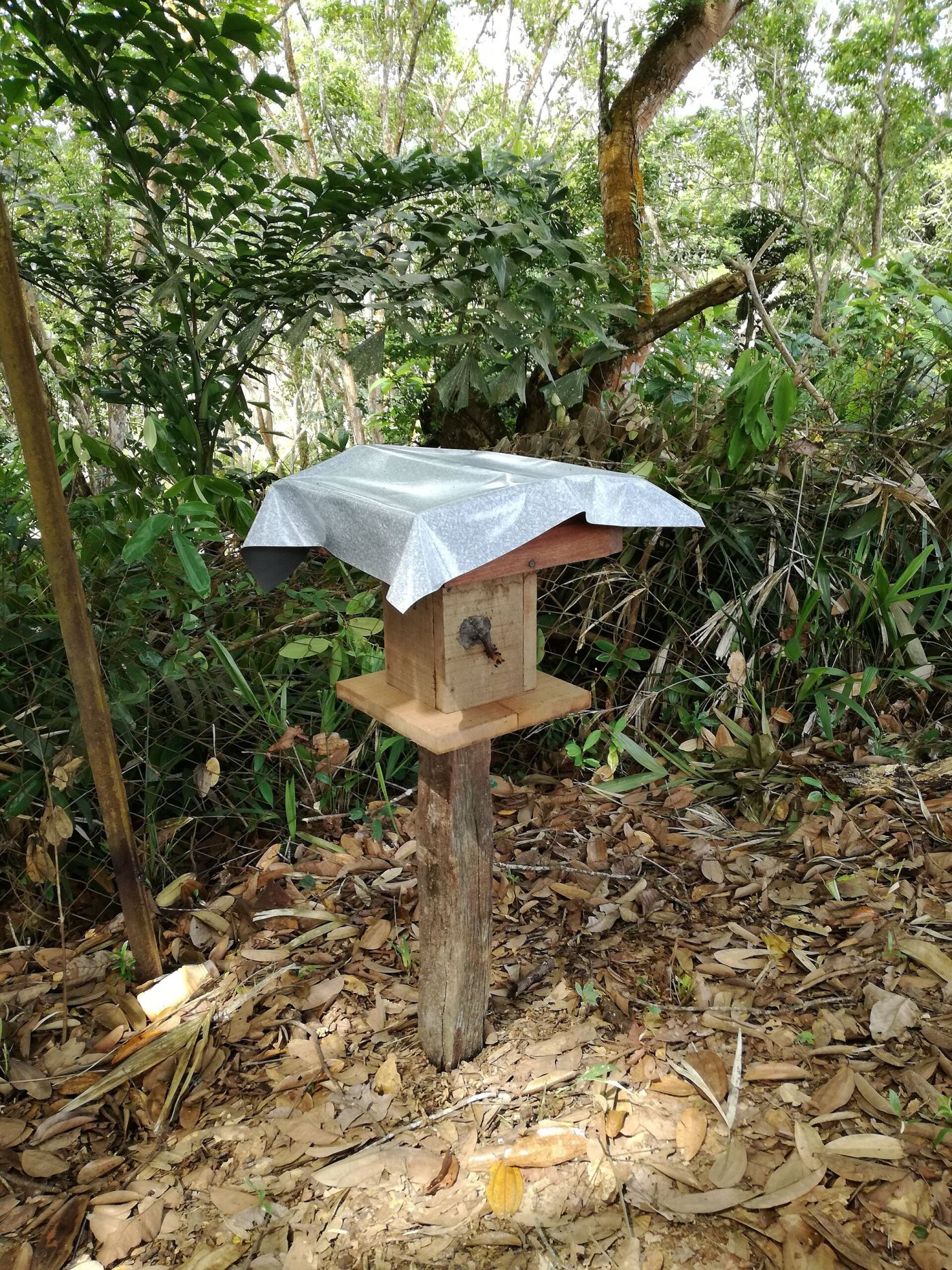
The question I hear most often when a customer picks up a jar of honey is: “Why is this honey so runny — has water been added to it?”
It is a fair question to ask — but the conclusion drawn from it is wrong. Stingless bee honey is naturally thinner than ordinary honey. And that is exactly the problem: most buyers judge stingless bee honey by the standards of regular bee honey, so they easily dismiss the real thing and just as easily end up buying something diluted.
First of all: how stingless bee honey differs from ordinary honey
Stingless bees do not build hexagonal wax combs. They shape round pots out of plant resin mixed with wax, each about the size of a little fingertip, and store their honey inside them. The honey sits in sealed resin pots and ferments slowly through naturally occurring microorganisms.
Two direct consequences follow:
- A higher water content — usually around 25–30%, whereas ordinary honey sits at about 17–20%. That is why it is thin and flows quickly.
- A sour note — the fermentation produces organic acids. A clean, gentle sourness, not a harsh one.
If someone selling stingless bee honey advertises it as “thick as forest honey, wonderfully sweet”, you should ask them to explain. Thickness and heavy sweetness are not characteristics of this honey.
Six checks you can run at home
1. Taste: sour first, sweet after
Take a little on the tip of your tongue. Genuine stingless bee honey turns clean and sour almost immediately; only then does the sweetness come through, and there is a faintly astringent finish from the resin. If all you get is a blunt sweetness that then vanishes, it is most likely ordinary honey with a squeeze of lime added, or syrup.
2. Consistency: it runs in a stream, it does not drip
Tilt the jar. Stingless bee honey runs in an unbroken, fairly quick stream. Ordinary honey at the same temperature flows slowly and breaks into drops.
3. It does not crystallise
This is a strong indicator. Ordinary honey kept for a long time, especially in cold weather, tends to crystallise into sugar granules at the bottom of the bottle. Stingless bee honey almost never crystallises, because its glucose content is far lower. A jar of “stingless bee honey” with a hard sugar layer at the bottom deserves suspicion.
4. Smell: a light fermented aroma
Smell it carefully and you will catch a faint, gentle sourness, sometimes a little like very lightly fermented fruit. Ordinary honey has a clearer floral scent and none of this sour edge.
5. A light fizz when you open the lid
Stingless bee honey with active ferments can generate a little gas, so you may hear a very soft hiss as the lid comes off, or see a few tiny bubbles on the surface. This is normal.
But be clear about the difference: tiny bubbles are normal, fizzing hard like a carbonated drink is not. The latter means the honey has over-fermented through poor storage — not dangerous, but it has lost its quality and the taste will be harshly sour, turning towards alcohol.
6. It can be traced back to a specific hive
All five checks above rely on the senses, and the senses are only reliable once you know the product well. The surest method is honey that carries a batch code traceable to a specific hive (colony), a specific farm and a specific harvest date.
In this system, every colony has its own QR code. Scan it and the hive’s full record appears: its origin, the date of its colony split, the care log, and which batch of honey was taken on which day. Not for show — but because this is the only thing you can verify with data instead of with promises.
Three popular tests that prove nothing
Dropping honey into water to see whether it dissolves. This one is shared very widely and is all but useless for stingless bee honey. Because its water content is high, it dissolves quickly in water — and the person testing concludes “fake honey”, when in fact it is the real thing.
Lighting a match dipped in honey. The result depends far more on how damp the match is than on the quality of the honey. Skip it.
Dropping in an ant to see whether ants swarm it. Whether ants come depends on the ant species and the surrounding smells. It tells you nothing.
So where should you buy with confidence
Three questions worth asking the seller — and the answers tell you a great deal:
- “Which farm is this honey from, and on what date was it harvested?” — a real beekeeper answers straight away.
- “Is there a traceable batch code?” — if there is, you can check for yourself instead of having to take it on trust.
- “Why is the honey so thin?” — someone who knows the craft will explain the resin pots and the moisture content. A casual reseller usually stumbles, or switches to insisting “my honey is very thick”.
Read more: why stingless bee honey tastes clean and sour and costs more, or the honeys we currently have, each with its traceability code.