
This is the question people ask most often, and also the one answered least honestly.
I am not going to give you a specific profit figure, because anyone who hands you a confident number without knowing where your garden is, what the forage is like, or who you will be selling to, is giving you that number to make a sale — not to help you make a decision.
Instead, here are the variables that really decide whether you make money or lose it.
The economics of the stingless bee
Two things to understand before any calculation:
Yields are very low. Each hive (colony) gives only a modest amount of honey over a whole year — far less than an ordinary honey bee. This is biology, not poor technique. Anyone promising you high yields has either got the wrong species, or is selling you colonies.
The selling price is high. Precisely because it is rare. That is what makes up for the low yield.
So the problem is not "keep more hives to sell more", it is "how do I sell it for what it is really worth". That is a question of brand and trust, not of volume.
Four income streams, not just honey
People who think only about selling honey usually find it hard to turn a profit. In practice, every model that works has several streams:
- Honey. The most familiar stream, but often not the biggest.
- Colonies for sale. A strong hive yields a colony split each year. For many keepers this is the main income — and it depends far less on the flowering season than honey does.
- Other hive products. Pollen and propolis. Small quantities, but high value per unit.
- Services. Technical transfer and training, setting up farms for other people, hosting visitors for a farm experience. For a farm with good scenery and a good story, this can be the steadiest income of all, because it does not depend on the weather.
What the start-up costs consist of
The exact figures depend on the region and the scale, but the line items are always these:
- Colonies — the largest item, counted per hive.
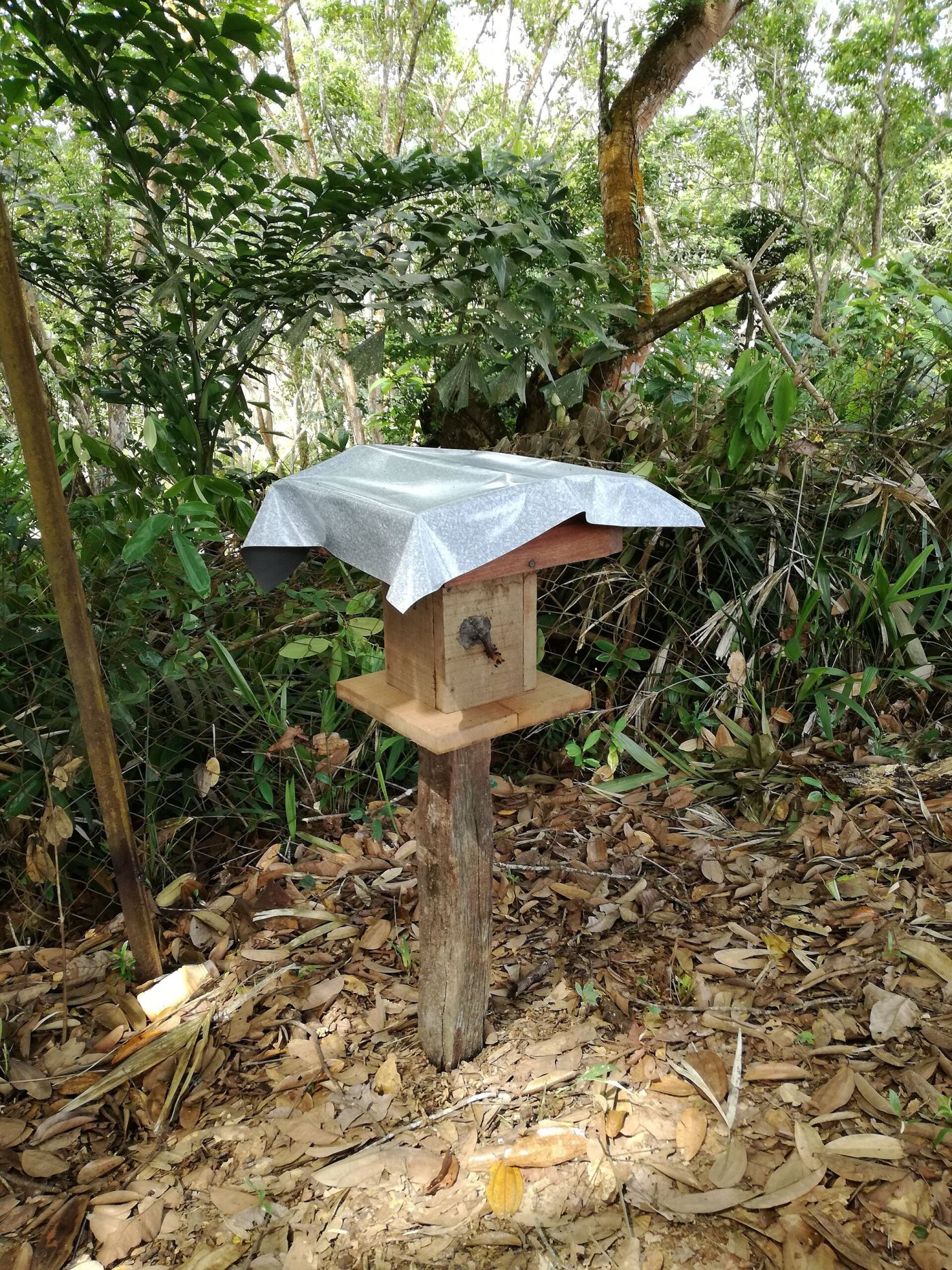
- Hive boxes — far cheaper if you build them yourself.
- Improving the forage around the garden — usually forgotten at the planning stage, yet it directly decides whether your colonies stay strong.
- Basic tools — not many; stingless bees need no elaborate protective gear because they do not sting.
- Learning the craft — you can work it out on your own, but proper training shortens the process and cuts the number of colonies you lose in the first year.
Compared with many other farming models, the start-up capital for stingless bees is moderate and the annual running costs are very low — no feed, no medicines, almost no labour.
Four factors that decide success or failure
1. The forage around your garden
More important than everything else put together. In a garden poor in flowers, no amount of skill will make a colony grow. Before you buy any colonies, walk a few hundred metres in every direction around your house and answer this for yourself: which months of the year is anything in bloom here?
2. Can you actually sell it
This is where many people's hopes come apart. Producing honey is one thing; selling it at the right price is another thing entirely.
Stingless bee honey costs several times more than ordinary honey. A customer who has never heard of it will ask straight away, "why is it so expensive?" You need an answer — and, more importantly, you need to be able to prove it.
This is why traceability is not window dressing. When a customer scans the code and sees exactly which hive, which farm, which harvest date, the question "why is it so expensive?" answers itself.
3. Reaching a viable scale
A few hives in the garden is a hobby: honey for the household and better fruit set on your trees. Well worth doing — but don't call it a business.
To make an income you need scale, and scale in turn demands matching forage — you cannot cram a lot of hives into a small garden and expect them all to stay strong.
4. Patience through the first year
The first year brings in almost nothing. Colonies need time to settle, and the sound advice is to take no honey in the first year. Anyone coming in expecting to recover their money within six months will be disappointed.
Three kinds of people who should not keep them
Said plainly, to save you money:
- Anyone who needs income right away. This is a long-term model.
- Anyone whose surrounding land is heavily sprayed. No technique can save a colony in the middle of an area under heavy pesticide use.
- Anyone who dislikes selling. If you only want to keep the bees and would rather someone else handled the sales, look for a partnership or consignment arrangement from the very start; don't keep bees and then find yourself sitting on the honey.
So how should you begin
The least risky way: start small, learn for real, and only then expand. A few hives in the first year, to understand the bee and to understand your own garden. If the colonies do well and you are still enjoying it, multiply them from your own hives — cheaper, and already suited to your local conditions.
If you want to move faster, take a look at the cooperative expansion model — the process, identified colonies and an outlet for your product are all in place, in exchange for following a common standard. Or the technical transfer packages, if you want to do it yourself but need someone to guide you through the early stage.