
Recent studies show stingless bee honey has stable antimicrobial activity that does not depend on hydrogen peroxide, and contains trehalulose, a low-GI sugar. Here is what the science really says.
A study by Embrapa (Brazil) published in May 2026 found that placing stingless bee colonies next to Arabica coffee raised yields on nearby branches by up to 67%. What can Vietnamese growers apply?
At Ong Dú Đất Rồng, a healthy bee colony does not begin only with the starter hive, but with the right living environment: greenery, flowers, shade, quiet surroundings, and a grower who observes the bees every day.
Research by Embrapa and the University of Bristol (2026) shows that with identical hive boxes about 60% of returning workers enter the wrong colony. Alternating entrances and colored boxes cut this to 48% and about 38%.
In July 2026, The Future of Honey event in Kuala Lumpur introduced a certification framework dedicated to stingless bee honey. Standardization and traceability are becoming key to the industry.

A beginner's guide to stingless beekeeping: choosing a healthy colony, siting the hive, keeping flowers within flight range, regular checks and the common mistakes to avoid.
Time the split for when the colony is ready and divide queen cells and workers sensibly — a strong hive can double each year.
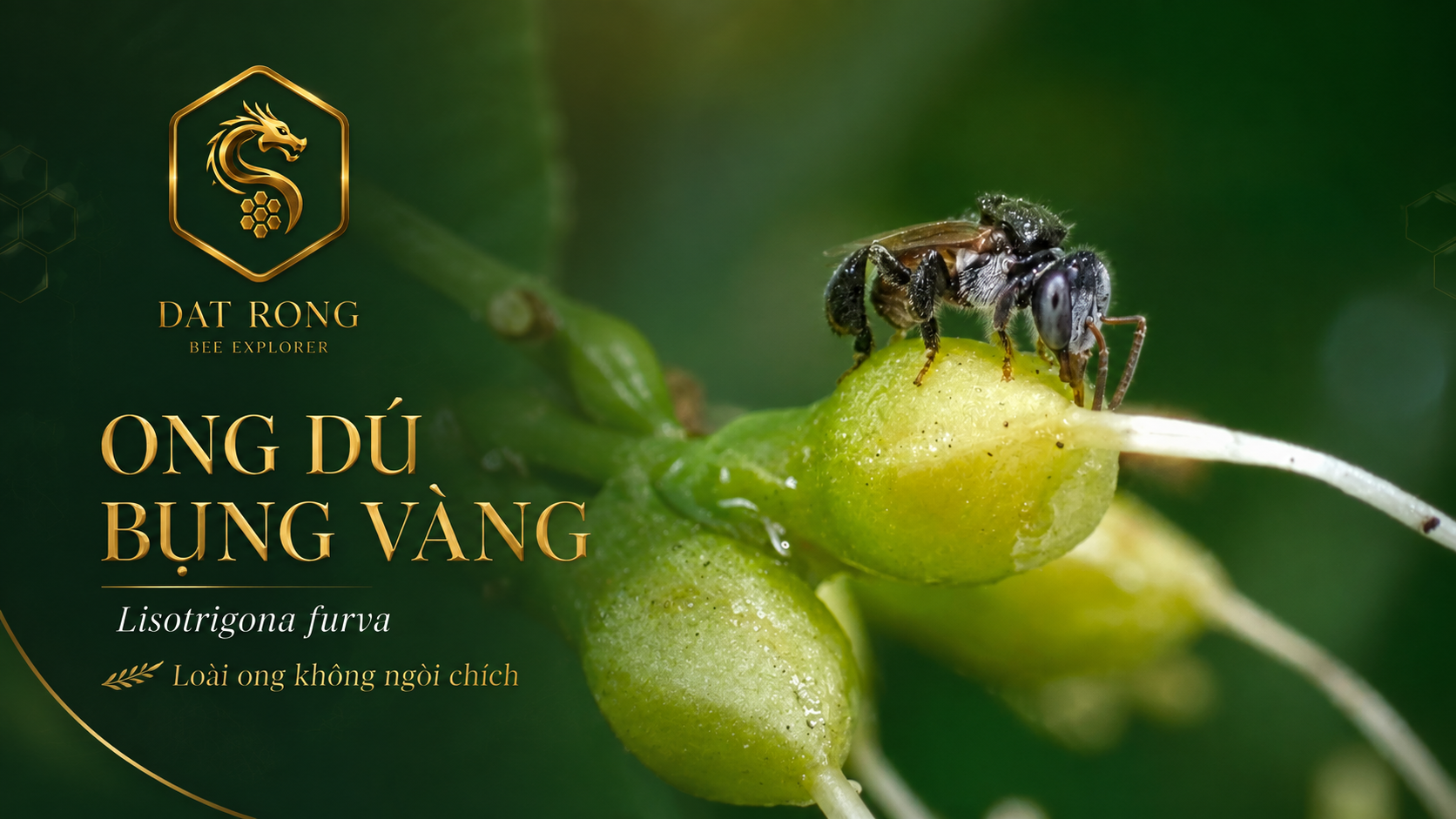
Stingless bees belong to the tribe Meliponini in the family Apidae. About 605 species have been recorded worldwide; Vietnam is home to roughly 16, across genera such as Tetragonula, Lepidotrigona and Lisotrigona.
The secret is the resin pot: the honey ferments slowly and naturally, building a complexity that honeybee honey never develops.