
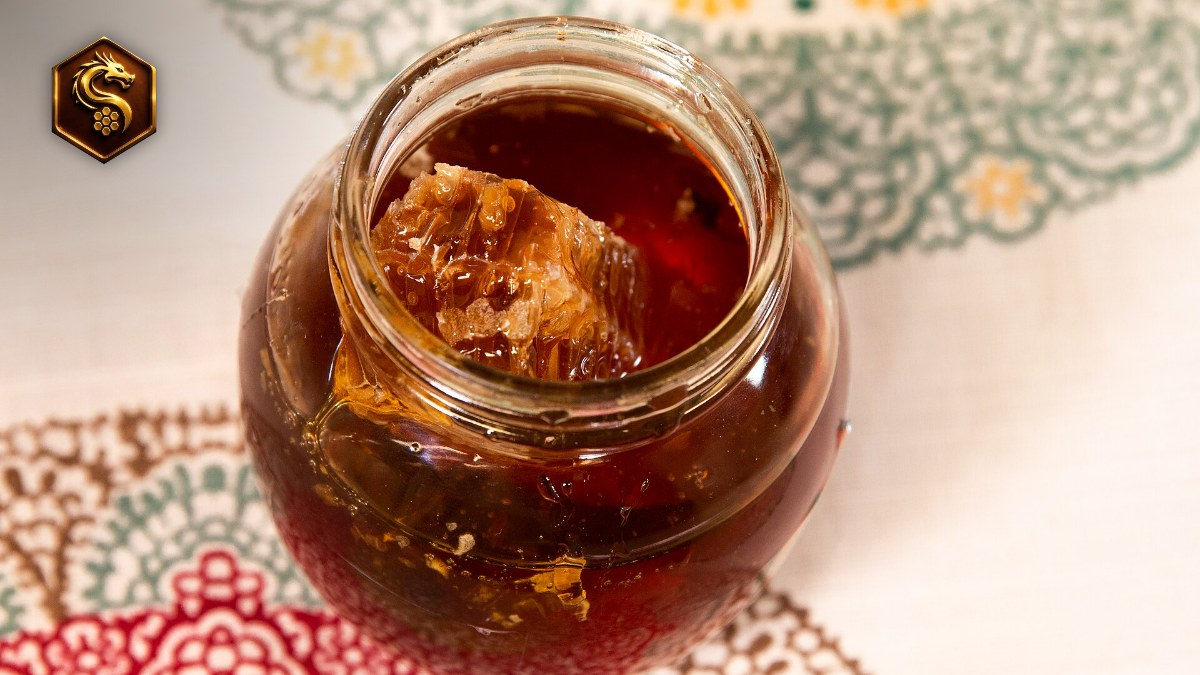
Stingless bee honey is precious not only because it is rare, but because every drop is stored in tiny "honey pots" made of wax and plant resin. Harvesting the wrong way can contaminate the honey, make it ferment quickly and weaken the colony.
Remember: Harvest only from the honey super – never touch the brood – and always leave reserves for the colony.
When to harvest
The colony is strong and the honey super is full of sealed honey pots.
After a major bloom, when the hive weight has clearly increased.
On a dry morning – honey absorbs less moisture.
Equipment
Stainless steel knife, stainless steel or glass tray, fine stainless steel sieve.
Clean honey suction tube or syringe (for pot-by-pot extraction).
Sterilised, completely dry glass jars.
Gloves, face mask, clean cloths.
Step-by-step harvesting
Open the honey super gently without shaking the brood area.
Extract honey in one of two ways: pierce and suck out each honey pot (cleanest), or cut out clusters of honey pots and let the honey drain through a sieve.
Do not crush pollen pots or brood together with the honey – this is the main cause of cloudy honey that ferments quickly.
Leave part of the honey pots for the colony.
Close the hive immediately, seal gaps and wipe up spilled honey to deter ants and robber bees.
Processing and storage
Stingless bee honey has a higher moisture content than regular honey and a characteristic mild tartness, so it ferments easily if stored incorrectly.
Task | Do | Don't |
|---|---|---|
Filtering | Filter through a fine stainless steel sieve and let it settle | Filter through dirty cloth or leave it open for long |
Bottling | Clean, dry glass jars with a little headspace | Low-quality plastic bottles or damp jars |
Storage | A cool place; the fridge for long-term storage | Hot places or direct sunlight |
Labelling | Harvest date, flower area, traceability code | No information on origin |
Why traceability matters
All stingless bee honey is not the same: taste and colour vary with bee species, flower area and harvest season. Recording this information builds buyer trust and adds value. At Đất Rồng, every batch of honey is linked to a specific source area and harvest date.
Frequently asked questions
My stingless bee honey has light foam or bubbles – is that a problem?Natural stingless bee honey has high moisture, so it can ferment slightly if kept warm. Store it cool to keep the flavour stable.
Heating changes its natural flavour and is not recommended. Cool storage is the simplest and safest method.